

Holiday Party Catering Ideas for Texas Businesses
A company holiday party can go wrong fast when the food feels like an afterthought. Cold trays, long lines, limited options, and messy serving setups can drain the energy from an event before the first toast.
For Texas businesses, the good news is that holiday catering has room for personality. The menu can feel festive without being stiff. It can nod to local favorites without turning every event into a barbecue buffet. It can serve a mixed crowd well, from lifelong Texans to out-of-town guests, from brisket fans to vegetarian eaters.
The best catering plan starts with three questions:
How formal should the event feel?
How much time will people actually spend eating?
What menu will still taste good after travel, setup, and service?
Once those answers are clear, the food becomes easier to plan. Here are practical holiday party catering ideas that work well for Texas teams, clients, vendors, and guests.
Start with a format that matches the party
Before picking brisket, tamales, or desserts, choose the service style. The same menu can feel casual or upscale depending on how it is served.
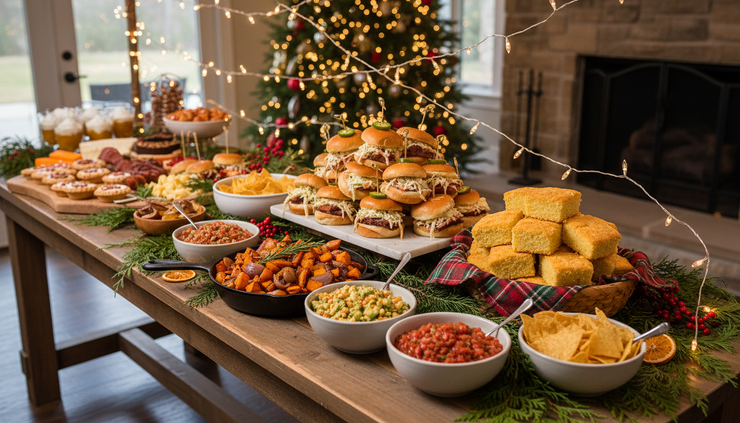
A buffet makes sense for larger gatherings where people will arrive in waves. It gives guests choices and helps control costs. It also works well for hearty Texas food, which often holds up better in chafing dishes than more delicate plated items.
Passed appetizers fit shorter receptions. They keep people moving and make the event feel polished without asking guests to sit down for a full meal. This format works especially well when paired with a few stationary food displays.
Food stations are a strong middle ground. They spread guests across the room, reduce bottlenecks, and make the meal feel more interactive. A taco station, carving station, or dessert bar can become part of the event experience.
A plated dinner feels the most formal. It works well for awards banquets, client appreciation dinners, and leadership events. It also requires more planning around staffing, timing, seating, and dietary needs.
Buffet
Best for casual parties, mixed schedules, and larger groups.
Food stations
Best for variety, movement, and shorter lines.
Plated dinner
Best for formal events, speeches, and seated programs.
Passed bites
Best for receptions, open houses, and cocktail-style events.
For most Texas businesses, stations or buffets offer the best balance of flavor, flexibility, and cost control.
Give classic Texas flavors a holiday twist
Texas food is bold by nature, which makes it easy to build a memorable holiday menu. The trick is to keep the food festive without making it too heavy.
Barbecue can absolutely work for a holiday party, but it does not have to mean full plates of brisket, sausage, and ribs. Smaller portions often serve the room better.
Try ideas like:
Mini brisket sliders with pickled onions
Smoked turkey breast with cranberry jalapeño relish
Sausage bites with mustard dipping sauce
Brisket empanadas or hand pies
Smoked chicken tacos with winter slaw
Tex-Mex also fits holiday events beautifully because it is flexible and easy to adapt. A fajita bar, taco station, or enchilada tray can feed a crowd without feeling plain.
For a more seasonal approach, combine familiar flavors with winter ingredients:
Butternut squash and poblano enchiladas
Roasted sweet potato tacos with black beans
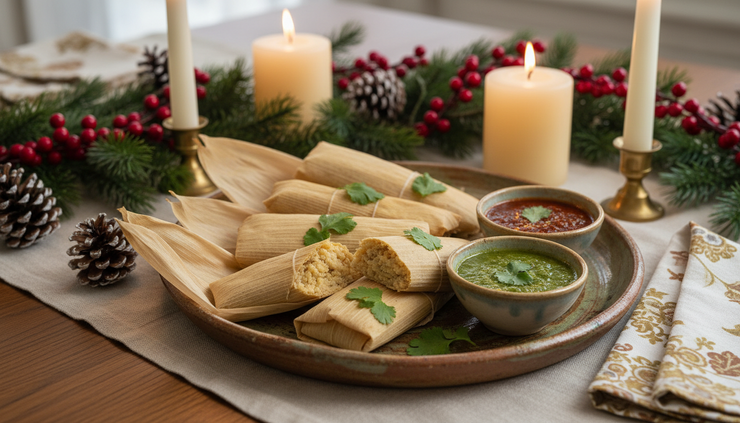
Tamales with red chile sauce and crema
Queso with brisket, mushrooms, or roasted peppers
Street corn cups with lime, cotija, and chili
Tamales deserve a special mention. They are already tied to holiday traditions in many Texas families, especially around Christmas. Serving them at a company party can feel warm, local, and celebratory. Offer a mix of pork, chicken, cheese, bean, and vegetable options so more guests can enjoy them.
Build a menu that works for everyone
A holiday party menu should never make guests feel like they need to ask for special treatment just to eat. Plan inclusive options from the start.
That does not mean every dish needs to suit every diet. It means the menu should include clear, appealing choices for common needs.
Plan for:
Vegetarian guests
Guests avoiding gluten
Guests avoiding dairy
Guests who do not eat pork
Guests who prefer lighter options
Guests who avoid alcohol
A strong menu might include brisket or smoked turkey as the main protein, then a vegetarian entrée that feels just as thoughtful. Grilled portobello tacos, cheese and roasted pepper tamales, vegetable enchiladas, or stuffed poblano peppers can all hold their own.
Labeling matters. Guests should not have to guess which sauce contains dairy or which side includes bacon. Simple menu cards help the line move faster and reduce awkward questions.
For a buffet, build in balance. Texas holiday catering can get rich quickly, so add fresh and bright items to the spread:
Citrus salad with greens and toasted pecans
Jicama slaw with lime dressing
Roasted seasonal vegetables
Charred corn and black bean salad
Fresh salsa, pico de gallo, and guacamole
The goal is not to make the menu restrictive. The goal is to make it easy for every guest to fill a plate they actually want to eat.
Use stations to keep the party moving
Food stations are one of the easiest ways to make holiday catering feel fun without overcomplicating the event. They create choice, shorten lines, and give guests a reason to circulate.
A few station ideas work especially well for Texas businesses.
A taco station gives guests control
Taco stations are popular because they are customizable. Guests can build a plate that feels light or filling.
Offer two or three proteins, such as smoked chicken, beef barbacoa, and roasted vegetables. Add tortillas, lettuce cups, rice, beans, salsa, onions, cilantro, queso fresco, and lime wedges.
The best taco stations include warm tortillas and enough serving space on both sides of the table. That small setup detail can cut down on crowding.
A barbecue carving station feels generous
A carving station adds a little theater. Smoked brisket, turkey, or ham can be sliced to order and served with rolls, sauces, and pickles.
This format works well when the event has a reception feel but still needs substantial food. It also helps with portion control because staff can serve consistent amounts.
A baked potato or loaded sweet potato bar is budget friendly
This option is warm, filling, and easy to scale. It can also support many dietary preferences.
For toppings, offer brisket, chili, beans, cheese, scallions, sour cream, roasted vegetables, salsa, and jalapeños. Sweet potatoes pair well with black beans, chipotle crema, pecans, and roasted peppers.
A late-night snack station can revive the room
If the party includes music, games, or dancing, consider a second wave of food. Mini breakfast tacos, churros, sliders, or chips and queso can land well later in the evening.
This works best when the first meal is lighter. Guests appreciate a warm snack before heading home.
Add festive appetizers that do not slow guests down
Appetizers set the tone. They also buy time if guests arrive at different points after work.
For stand-up events, avoid anything too messy. Foods that drip, crumble, or require a knife and fork can make mingling harder.
Good options include:
Mini chicken and waffle bites with hot honey
Jalapeño poppers with cream cheese or brisket filling
Shrimp tostada bites
Queso blanco cups with tortilla chips
Bacon-wrapped dates, with a non-pork option nearby
Cornbread muffins with whipped honey butter
Deviled eggs with smoked paprika
Mini tamale bites with salsa
A grazing table can also work, especially before a buffet opens. Give it a Texas spin with local-style cheeses, smoked nuts, pickled vegetables, fruit, crackers, charcuterie, pimento cheese, and spicy jams.
Keep serving temperature in mind. If appetizers will sit for more than a short window, choose items that still taste good warm or at room temperature.
Offer drinks that feel seasonal and easy to serve
Holiday drinks do not need to be complicated. A few thoughtful choices can make the whole event feel more festive.
For nonalcoholic options, serve:
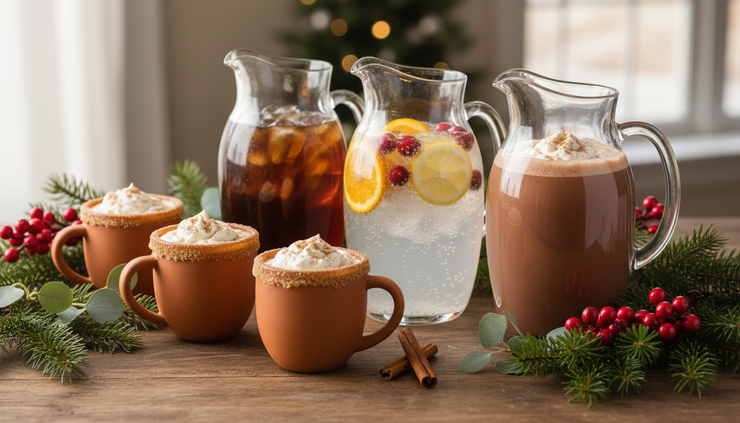
Sparkling water with citrus and cranberry
Sweet tea and unsweet tea
Mexican hot chocolate
Apple cider with cinnamon
Agua fresca with seasonal fruit
Coffee with flavored syrups or whipped cream
If alcohol is part of the event, keep the menu simple. Beer, wine, and one or two signature cocktails are easier to manage than a full bar. Consider drinks with Texas-friendly flavors such as grapefruit, lime, pecan, cranberry, jalapeño, or honey.
A ranch water bar can be a light, regional option if the venue allows it. For winter, a cranberry margarita or spiced paloma can feel festive without being too sweet.
Always make the nonalcoholic choices feel intentional. Guests who skip alcohol should still have something better than a plastic bottle of water.
Do not let dessert become an afterthought
Dessert is often the last thing guests remember. It is also one of the easiest places to add holiday character.
Texas-inspired desserts can be rich, nostalgic, and easy to serve in small portions. Mini sizes work best because guests may want to sample more than one.
Try:
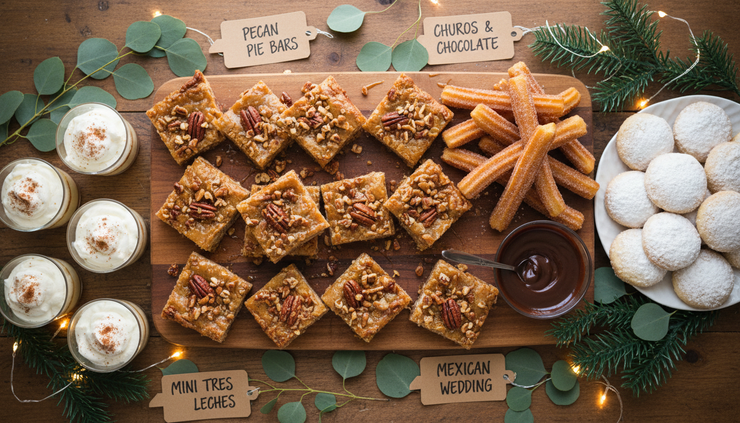
Pecan pie bars
Mini tres leches cups
Churros with chocolate or cajeta dipping sauce
Mexican wedding cookies
Sopapilla cheesecake bites
Bread pudding with bourbon sauce on the side
Gingerbread conchas
Chocolate tamales for a playful surprise
A dessert station can double as decor. Use tiered trays, small labels, greenery, and warm lighting. Keep it simple but abundant.
For morning or midday events, a holiday coffee and pastry bar may be enough. Pair kolaches, cinnamon rolls, fruit, and coffee with seasonal creamers. This is a smart option for teams that cannot host an evening party but still want a festive gathering.
Match the food to the Texas weather and venue
Texas weather can be unpredictable during the holidays. One day may feel chilly, and the next may feel warm enough for an outdoor patio. Catering plans should account for both.
If the event is outdoors or partly outdoors, choose food that can handle temperature changes. Covered serving dishes, warmers, and shaded drink stations help protect the setup.
For indoor venues, ask early about kitchen access, loading zones, electrical needs, and cleanup rules. Some venues restrict open flames, outside alcohol, or certain serving equipment. These details affect the menu more than many planners expect.
Timing also matters. A buffet for 200 people needs more space and more service points than a buffet for 40. If the party includes speeches or awards, coordinate meal service around the program so guests are not stuck in line during key moments.
For larger events, split food into duplicate stations. Two identical taco bars on opposite sides of the room usually work better than one oversized station.
Plan portions around the real event schedule
Catering portions depend on more than headcount. A party from 4:00 p.m. to 6:00 p.m. needs a different menu than one from 6:30 p.m. to 10:00 p.m.
Use the schedule as a guide:
Midday gathering Lighter entrées, salads, tea, coffee, and desserts often work well.
Afternoon open house Appetizers, grazing boards, and small bites may be enough.
Dinner party Plan a full meal with protein, sides, dessert, and drinks.
Evening reception Offer heavy appetizers or stations, especially if guests come straight from work.
Long party with entertainment Add a late snack or dessert service so the food does not disappear too early.
It also helps to know the crowd. A group that just finished a shift may want a heartier meal. A client reception may call for smaller, cleaner bites. A family-friendly party may need kid-friendly choices like mac and cheese, fruit, sliders, or quesadillas.
Keep the budget focused on what guests notice most
Holiday catering budgets can stretch quickly. To keep spending under control, focus money where it has the biggest effect.
Guests tend to notice:
Food temperature
Flavor and freshness
Line length
Clear labels
Enough variety
Friendly service
Dessert
They are less likely to remember five types of salad dressing or an overly large menu. A smaller menu done well usually beats a long menu with uneven quality.
A practical budget-friendly menu might include one main station, two sides, one vegetarian option, one salad, tea and water, and two desserts. Add passed appetizers or a signature drink only if the budget allows.
Disposable serving ware can save money, but choose sturdy plates and utensils if serving barbecue, saucy foods, or desserts. Flimsy plates can make even good food feel messy.
Bring it all together with a menu that feels intentional
The best holiday party menus have a clear point of view. They do not try to serve every possible dish. They pick a direction and carry it through.
A casual Texas comfort menu might include smoked turkey, brisket sliders, mac and cheese, roasted vegetables, jicama slaw, pecan pie bars, and iced tea.
A Tex-Mex holiday menu might include tamales, chicken enchiladas, roasted poblano rice, charro beans, winter salad, churros, and a cranberry lime mocktail.
A reception menu might include passed shrimp tostada bites, mini empanadas, queso cups, a carving station, a dessert bar, and coffee.
A lighter lunch menu might include fajita bowls, grilled vegetables, citrus salad, black beans, fruit, tea, and mini tres leches cups.
Pick the menu that fits the room, the schedule, and the people attending. Then make sure the service plan supports it. Good food matters, but warm food, short lines, clear labels, and enough staff are what make it feel easy.
For Texas businesses, a holiday party does not need to be formal to feel special. It needs food that tastes good, reflects the season, and gives people a reason to relax together. Start with the right format, add regional flavor, cover common dietary needs, and choose a few memorable touches. That is usually enough to turn a standard end-of-year gathering into a party people actually enjoy.


Comments